

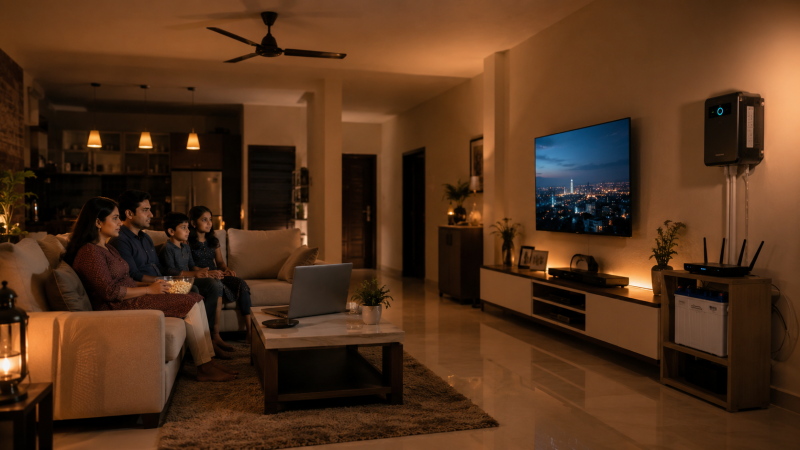
Power cuts are still a common challenge in many parts of India. Whether you're working from home, attending online classes, running a business, or simply trying to keep your family comfortable, a reliable home inverter ensures that your essential appliances continue working without interruption.
However, choosing the right inverter isn't as simple as buying the biggest model available. Capacity, battery type, backup time, appliance load, and future expansion all play an important role.
In this comprehensive guide, we'll explain everything you need to know before buying the best inverter for your home in India.
Table of Contents
- Why Every Home Needs an Inverter
- Types of Home Inverters
- Pure Sine Wave vs Square Wave
- How to Calculate the Right Inverter Capacity
- Choosing the Right Battery
- Best Inverter Brands in India
- Common Buying Mistakes
- Frequently Asked Questions
- Final Recommendation
Key Takeaways
✔ Choose your inverter based on appliance load, not just price.
✔ Pure sine wave inverters are recommended for modern homes.
✔ Tubular batteries generally provide longer life and better performance.
✔ Leave room for future appliance additions.
✔ Purchase from an authorized seller to ensure genuine products and warranty support.
Why Every Home Needs an Inverter
Electricity powers almost every aspect of modern life. During outages, an inverter provides uninterrupted power to essential appliances such as:
- LED lights
- Ceiling fans
- Wi-Fi router
- Laptop
- Television
- Desktop computer
- CCTV system
- Refrigerator (selected models)
- Water purifier
A properly selected inverter improves convenience while protecting sensitive electronics from sudden power interruptions.
Types of Home Inverters
1. Pure Sine Wave Inverter
Recommended for most households.
Advantages:
- Safe for laptops and smart TVs
- Silent operation
- Better appliance efficiency
- Lower heat generation
- Suitable for modern electronics
Best For:
- Apartments
- Independent homes
- Home offices
- Smart homes
2. Square Wave Inverter
A budget-friendly option designed for basic electrical loads.
Limitations:
- Can produce humming noise in fans
- Not ideal for sensitive electronics
- Lower efficiency
Suitable only for:
- Basic lighting
- Simple fan loads
- Temporary backup requirements
Pure Sine Wave vs Square Wave
| Feature | Pure Sine Wave | Square Wave |
|---|---|---|
| Performance | Excellent | Basic |
| Sensitive Electronics | Safe | Not Recommended |
| Fan Noise | Silent | Audible |
| Efficiency | High | Moderate |
| Battery Performance | Better | Average |
| Recommended | ✔ Yes | Limited Use |
For most Indian homes, a pure sine wave inverter is the better long-term investment.
How to Choose the Right Inverter Capacity
The most common mistake is buying an inverter without calculating the electrical load.
Step 1: List Your Appliances
| Appliance | Approximate Wattage |
| LED Bulb | 10 W |
| Ceiling Fan | 70 W |
| LED TV | 120 W |
| Wi-Fi Router | 15 W |
| Laptop | 90 W |
| Desktop Computer | 250 W |
| Refrigerator | 250 W (starting surge may be higher) |
Step 2: Calculate Total Load
Example:
- 4 Fans = 280 W
- 8 LED Lights = 80 W
- TV = 120 W
- Router = 15 W
- Laptop = 90 W
Total = 585 Watts
Choose an inverter with some extra capacity instead of matching the exact load.
Recommended Inverter Capacity
| Home Size | Suggested Capacity |
| 1 BHK | 700 VA to 900 VA |
| 2 BHK | 900 VA to 1500 VA |
| 3 BHK | 1500 VA to 2000 VA |
| Large Home | 2000 VA and above |
The ideal capacity depends on the number of appliances you plan to use during a power cut.
Choosing the Right Battery
Your battery determines how long the backup will last.
Tubular Battery
Advantages:
- Longer lifespan
- Better performance during frequent power cuts
- Low maintenance
- Excellent charging efficiency
Recommended for most households.
Flat Plate Battery
Advantages:
- Lower initial cost
- Suitable for occasional outages
Best for areas where power cuts are rare.
Battery Backup Estimate
| Battery | Typical Backup* |
| 150 Ah | 3 to 5 Hours |
| 180 Ah | 4 to 6 Hours |
| 200 Ah | 5 to 8 Hours |
*Actual backup depends on connected load, battery condition, and inverter efficiency.
Best Inverter Brands in India
Several trusted brands offer reliable home power backup solutions.
Luminous
Known for:
- Pure sine wave technology
- Wide service network
- Smart charging
- Excellent home solutions
Ideal for most residential users.
Microtek
Popular for:
- Strong performance
- Good value
- Reliable backup
- Wide product range
Suitable for homes and small offices.
Exide
Well known for durable inverter batteries with dependable backup.
Livguard
Offers modern technology, stylish designs, and efficient battery management.
Genus
Provides economical solutions suitable for homes and commercial spaces.
Common Mistakes to Avoid
Buying Only Based on Price
A cheaper inverter may not meet your power requirements.
Ignoring Future Needs
Consider whether you'll add appliances in the coming years.
Choosing the Wrong Battery
An excellent inverter paired with a poor battery delivers disappointing performance.
Overloading the Inverter
Running more appliances than recommended reduces efficiency and battery life.
Buying from Unauthorized Sellers
Always purchase genuine products with proper manufacturer warranty and after-sales support.
Maintenance Tips
To maximize inverter performance:
- Keep the battery terminals clean.
- Ensure proper ventilation around the inverter.
- Avoid overloading.
- Schedule periodic servicing if recommended.
- Replace aging batteries when backup time noticeably declines.
Frequently Asked Questions
Which inverter is best for home use?
A pure sine wave inverter with the correct capacity is generally the best choice for modern homes.
What size inverter do I need for a 2 BHK?
Many 2 BHK homes are well served by a 900 VA to 1500 VA inverter, depending on the connected load.
Is a tubular battery better?
Yes. Tubular batteries generally offer longer life and better performance than flat plate batteries.
Can I run a refrigerator on an inverter?
Many refrigerators can be supported, but always verify the inverter capacity and the appliance's starting power requirement.
Which brand is better?
Luminous, Microtek, Exide, Livguard, and Genus are all trusted brands. The right choice depends on your power needs, budget, and desired features.
How long does an inverter battery last?
Most quality inverter batteries last around 3 to 6 years with proper maintenance, though lifespan varies by usage and battery type.
Is a pure sine wave inverter worth the extra cost?
Yes. It is safer for modern electronics, operates more quietly, and generally provides better efficiency.
Can I upgrade my inverter later?
Many users upgrade when their power requirements increase, but selecting slightly higher capacity initially can reduce future costs.
Final Buying Recommendation
Selecting the best inverter for your home isn't about choosing the most expensive model. It's about matching your home's power requirements with the correct inverter capacity, a high-quality battery, and a trusted brand.
For most Indian households, a pure sine wave inverter paired with a tubular battery provides the ideal balance of efficiency, safety, and long-term reliability.
Before purchasing, calculate your electrical load, consider future appliance additions, and choose products backed by dependable warranty and service.
Buy Genuine Home Inverters from Kamtush.com
At Kamtush.com, we offer a carefully selected range of:
- Home Inverters
- Inverter Batteries
- Home UPS Systems
- Solar Power Solutions
- Voltage Stabilizers
- Power Backup Accessories
Whether you're powering a small apartment, a large family home, or a small office, our experts can help you choose the right solution for your needs.
Explore our collection today and invest in reliable power backup with confidence.
Leave a comment